
Coming soon….the book.
This Isn’t Personal
Understanding stress, self-harm and the world we’re living in
A short, engaging book designed to help people understand self-harm through the lens of the human nervous system and modern life.
The central idea
This Isn’t Personal is a book about understanding.
Understanding why we feel and behave the way we do.
Learning why our brains and bodies can respond in ways we don't always want them to.
Discovering why we can struggle even when, from the outside, everything seems fine.
And making sense of behaviours that make no sense – like self-harm – by understanding what’s happening beneath the behaviour.
At its heart is a simple idea: there are reasons we feel the way we do and there are reasons we do the things we do.
And those reasons come down to the fact that we are human.
Where it began
Twenty-five years ago, I was studying zoology at university. I was also self-harming.
I didn't understand why I was doing it and why it was so hard to stop.
No one explained it to me. I felt scared, confused and alone.
Many years after I stopped self-harming, I discovered that I was still holding on to the belief that there must have been something wrong with me.
I've spent much of my life trying to understand why humans do the things we do.
Through my background in zoology, my work in sustainability and my personal journey – including as a parent – I began piecing together an understanding of human behaviour that has transformed how I see us.
We’ve forgotten that we’re organisms, shaped by millions of years of evolution.
We’ve lost sight of the fact that we have fundamental human needs to both survive and thrive.
We’re not aware of our brilliant and complex nervous system, which is designed above all else to keep us alive.
Or that our brain is constantly trying to predict what will happen next to keep us safe.
When we start looking at ourselves through this fascinating lens, many of the things we judge ourselves for start to make sense.
Something else happened for me when I understood all this. I stopped feeling ashamed of my self-harm. The behaviour that hadn’t made sense all those years ago suddenly did. And I forgave myself.
This book contains the understanding I wish someone had given me 25 years ago.
My hope is that it will help the many young people, families and professionals who are navigating this challenge today to see self-harm differently.
What kind of book is it?
I don't want this to feel like a conventional self-help book.
It will be short, highly visual and spacious. Some pages might contain only a sentence. Others might contain a couple of short paragraphs, a photograph, an illustration or a simple visual explanation.
There will be moments where the reader is invited to stop and think rather than simply keep reading.
I want it to be possible to read the whole book relatively quickly, while creating pages people will return to again and again, or use to start a conversation.
I want it to be something somebody can give to another person when they don't know what to say themselves.
Who it is for
The book is written with people who self-harm, or have self-harmed, in mind.
Its secondary aim is to empower the people who support them.
Parents, teachers, pastoral teams, medical and mental health professionals, and others who want to understand the behaviour rather than simply react to it.
I want it to be accessible to teenagers and young adults while still being entirely relevant to an adult encountering these ideas for the first time.
The language will be simple, but the ideas won't be simplistic. The energy will be calm, reassuring and inspiring.
Four years of development
The ideas behind this book have been developing for the past four years.
During that time, I’ve spoken with young people who self-harm and those struggling with anxiety, overwhelm and behaviours they don't always understand.
I've listened to parents trying to support their children, often frightened and unsure what to say or do.
I've worked with schools, youth organisations and GPs, seen the challenge from their perspective and delivered training on nervous system literacy and self-harm.
These conversations have shaped this project. They have helped me understand not only what we need to explain, but how we need to explain it.
That distinction is incredibly important.
Young people have told me that some of the information they received about self-harm made them feel worse rather than better.
Some described coming away feeling more ashamed and that the way self-harm had been talked about actually increased their urge to do it.
That stayed with me, and it led me to think differently about what this book needs to be – both the content and the experience of reading it.
The experience matters
I don't just want this book to contain helpful information. I want it to be a healing and transformative experience.
I want someone to open this book and feel their body relax. To discover that their brain and body are amazing. To understand that we develop protective responses for a reason. And that behaviours that seem to make no sense may develop because, in some way, they do something for us.
The book will not minimise self-harm. It will not present it as harmless or something that doesn't need support.
But it won't begin by frightening someone about what they're doing, telling them to stop or treating the behaviour as evidence that something is wrong with them.
It will begin with understanding: Your experience makes sense. You may want to change some things. You may need support. But struggling does not mean there is something wrong with who you are.
That is the experience I want someone to have as they move through the book.
They should finish it feeling more hopeful about themselves and the world than they did when they opened it.
What people have said:
The missing book
As I started looking more closely at what is currently available, I saw how difficult it is to find this kind of book.
It doesn’t exist.
There are clinical resources. There are books for parents and professionals. There are workbooks and resources focused on managing or stopping self-harm.
But there appears to be a significant gap for something different:
A beautiful, accessible book written directly for the person who is struggling, which helps them make sense of themselves rather than feeling like a problem to be solved.
I want to create something they might actually want to pick up. Something that doesn't look or feel like a mental-health intervention. Something you could give to someone as a gift.
Something that says, you deserve to feel seen, valued and understood.
The big picture
At the same time as thinking about this book, I’ve developed a wider approach that I call Nervous System Literacy.
It grew from the same fundamental question: What changes when people understand themselves as biological organisms?
Through my work with schools, individuals and workplaces, I have been developing ways to explain how our fundamental human needs and the brain and nervous system influence how we think, feel and behave – every minute of every day.
This work has helped me see much more clearly where self-harm sits.
Rather than starting with the behaviour itself, I paint a picture that’s relevant to all of us.
First, let's understand what you are – and where you’ve come from.
Then what your brain and nervous system are designed to do.
Then let's look at what happens when your needs aren't met, or when your system becomes overwhelmed.
And only then do we ask where self-harm fits into this picture.
What the book will do
The book will broadly take the reader through four stages.
1. Understanding humans
Before we can understand ourselves, it helps to understand what we are. We are a species shaped over an extraordinarily long period of time for a world very different from the one we now inhabit. The book begins with our evolutionary story, our fundamental needs and the environments in which human nervous systems developed.
2. Understanding yourself
From there, we move into the nervous system. The aim is to help the reader recognise that many of the things they experience as personal failings are understandable responses.
3. Understanding self-harm
Only once that foundation exists do we look directly at self-harm. Rather than beginning with the behaviour and asking How do I stop this?, we become curious about what might be happening around it.
What happens before it?
What changes afterwards?
What might the behaviour be doing?
What need could be sitting underneath it?
The intention is not to normalise or encourage self-harm. It is to remove shame and judgement from the process of understanding it, so that other possibilities can begin to emerge.
4. Understanding change
The final part looks towards support, change and building capacity. Not fixing yourself or becoming so resilient that nothing affects you, but understanding yourself well enough to recognise what you need, work with your nervous system, seek appropriate support and create more choice.
The written and visual language
One of the most important parts of the last four years has been finding the right language – both written and visual.
I want the science to be sound without the book feeling clinical and I want complex ideas about biology, evolution and nervous systems to feel simple without becoming simplistic.
Working directly with people has been an important part of developing that language. I've been able to notice what makes people lean in. What suddenly makes something click. What creates relief. What needs further explanation. And what language can inadvertently introduce more judgement or shame.
The visual experience is part of the communication. I'm developing a visual language drawing on nature, biology and the human world. I'm working with an artist to explore paper art and tactile imagery alongside photography, illustration and simple graphic elements.
It needs enough personality and energy to appeal to younger readers without becoming childish or trend-led.
I want the book to feel contemporary, beautiful, tactile, slightly unexpected and very human. That this is something worth keeping – and something you would feel good about giving to another person.
The ambition
Commercial book sales are one part of what I would like this project to achieve. I also want the book to reach people who may never receive it.
One route I'm interested in exploring is funding or partnerships that could enable copies to be distributed through schools, colleges, youth organisations and other places supporting young people.
That might eventually involve businesses, foundations, charities, philanthropists or other partners funding books for distribution.
The precise format is still being explored, including print-on-demand and independent print routes. Creative and production quality will be central to that decision.
My ambition is bigger than publishing a book. It’s to create something transformative and find ways to get it into the hands of people it can help.
Where the project is now
The book is currently being written and developed. The central idea, structure, tone and visual direction are becoming clear, while the first draft of the manuscript is ready. Design, production model and publishing route are still evolving.
This feels like the right point to bring in other people's expertise.
I'm seeking conversations around publishing and self-publishing, book design and art direction, print and production, safeguarding and expert review, distribution, partnerships and funding.
I don't expect one person or organisation to have all these answers. I'm starting conversations with people who understand different parts of the journey and can help me think well about what comes next.
Because ultimately, the result I'm working towards is simple:
A book that helps someone understand themselves – and feel better about themselves – because they read it.
And I know I need help to achieve it.
About the author
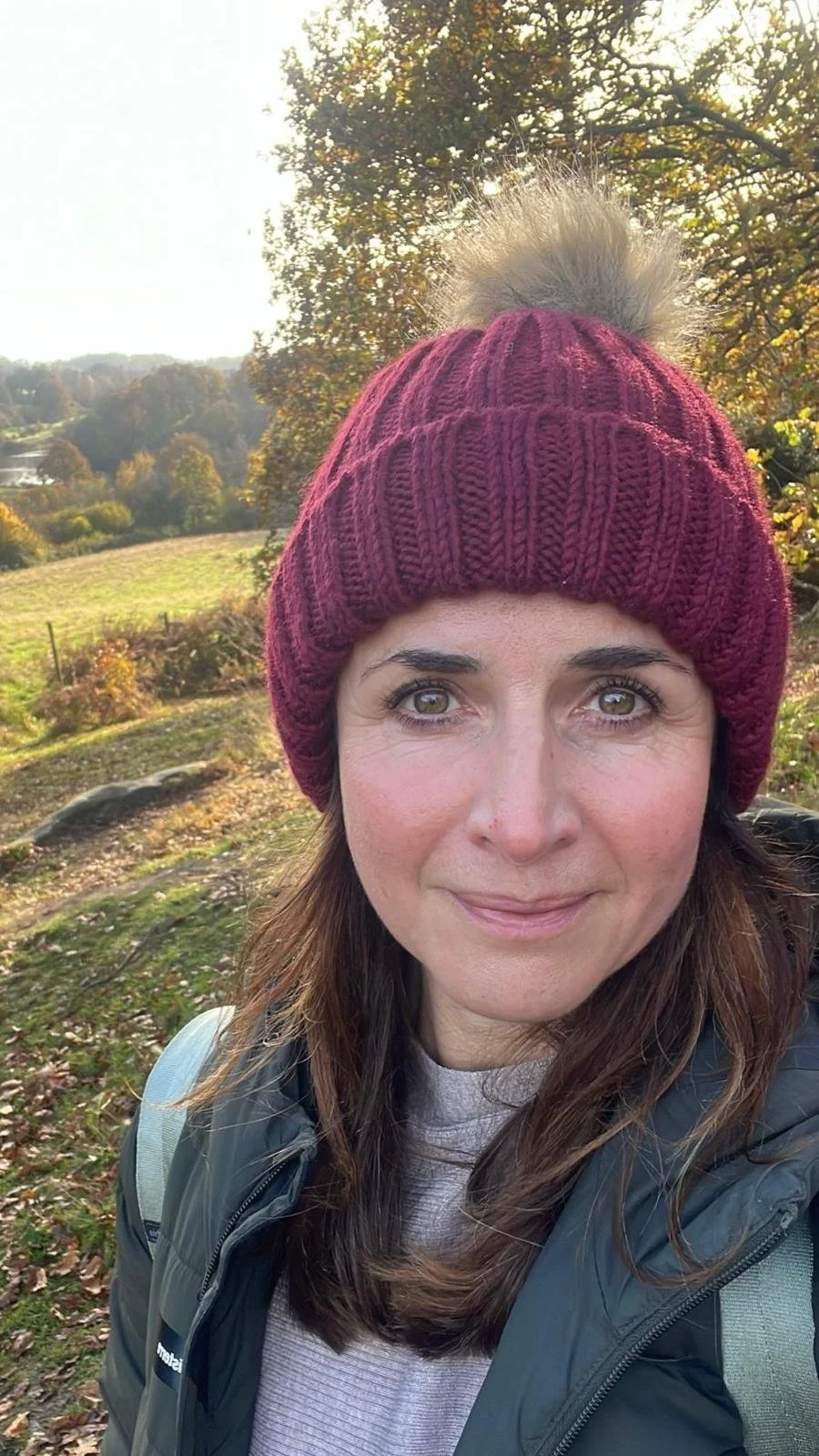
I'm Beth Derry, a zoologist, nervous-system educator and founder of Lovely Messy Humans.
I have a BSc in Zoology and an MSc in Ecology & Environmental Management and I spent more than 25 years working in sustainability and communications before my work turned towards human behaviour.
I'm a Certified Resilience Coach and Certified Havening Techniques® Practitioner, and I work with schools, young people, individuals and workplaces – helping people and organisations understand how biology and the nervous system influence the way we think, feel and behave.
But my interest in this subject began long before any of those qualifications. It began, in part, with being a zoology student who was self-harming and couldn't understand why.
This Isn't Personal is the book I wish somebody had been able to give me then.
If you have wisdom or resources that can help me to bring it into existence, I’d love to hear from you at hello@lovelymessyhumans.com.
Thank you.
Let's start a conversation
© 2026 Beth Derry. All rights reserved.
This Isn't Personal is a book currently in development. Please do not reproduce or share material from this page without permission.