Nervous System Literacy for educators, students and business
Our training explores the science of being human:
How stress shapes behaviour and relationships.
How emotional regulation is a superpower.
How to train and develop your nervous system.
Mental well-being in the UK has been steadily declining. But the challenges people face make perfect sense when viewed through the lens of nervous system science.
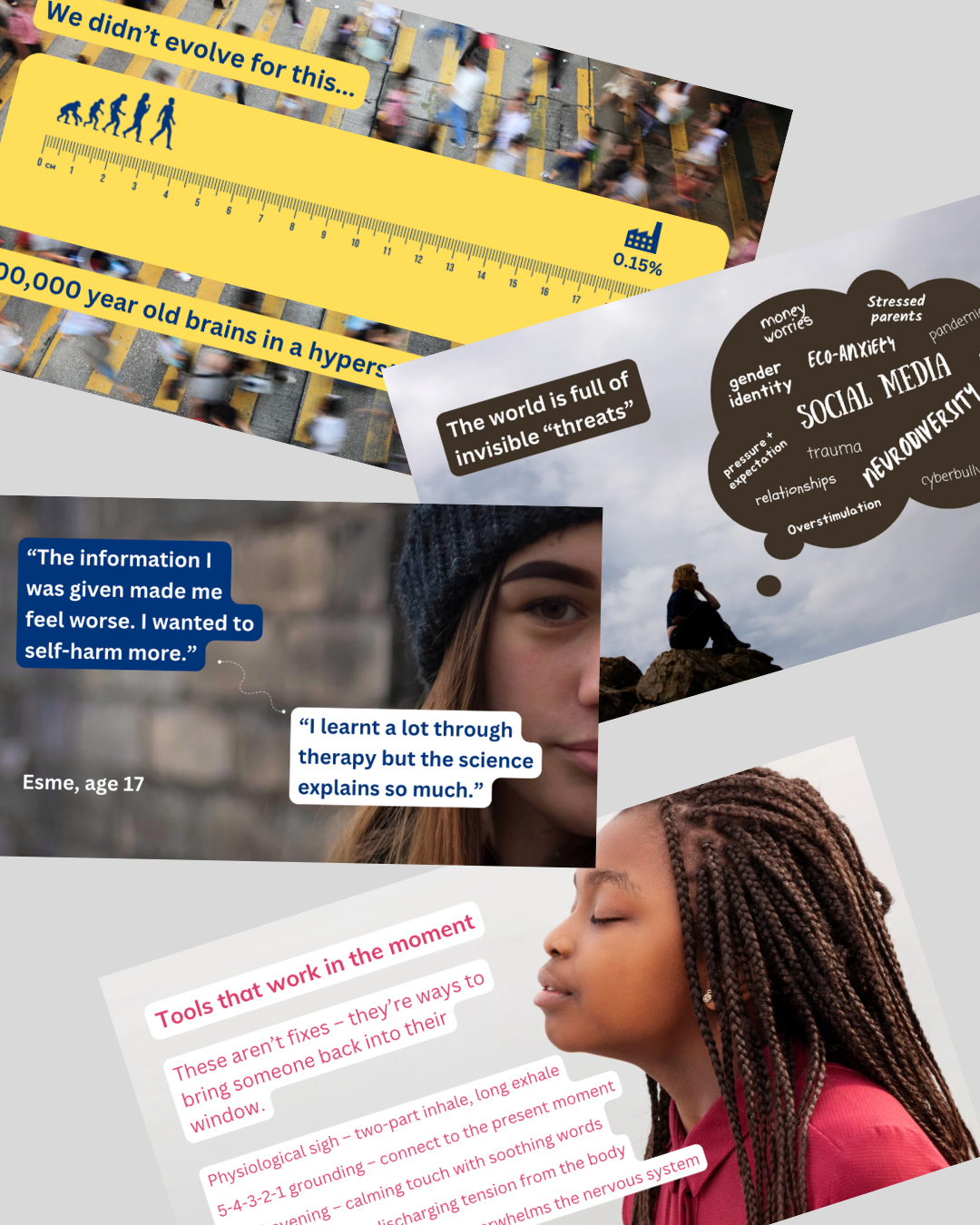
We’re biologically designed to survive in a world very different from the one we live in today.
Understanding the human nervous system and its impact on our daily lives, work and relationships is incredibly empowering.
Our training draws on insights from applied biology, neuroscience, psychology, science communication and lived experience.
We teach nervous system literacy to help people understand the science of being human.
Because when we start to see ourselves and each other through this lens, we can be more accepting and more equipped to make a meaningful difference.
Nervous System Literacy training and talks
-
For schools and colleges
Nervous system literacy is often the missing link in student wellbeing.
This session gives educators, pastoral teams and student wellbeing professionals practical insight into how the nervous system responds to stress and how to support young people more effectively.
From 90 minutes, delivered in person or online.
-
For youth and wellbeing teams
Nervous system literacy can transform how we understand and support people experiencing stress and distress.
This session helps profesionals and volunteers make sense of what’s happening beneath the surface, and respond with greater clarity, confidence and compassion.
From 90 minutes, delivered in person or online.
-
For students and young adults
Informative and inspiring sessions designed to help young people better understand themselves, their stress responses and how to navigate challenges with greater confidence.
Using biology to reframe stress and anxiety and sharing practical tools that support wellbeing, learning and performance.
Sessions can be tailored to your school or audience.
-
For businesses and organisations
Informative, inspiring sessions that explore biology and neuroscience in a business context.
Understand stress, emotional regulation and resilience, and learn practical tools to stay calm, focused and effective under pressure.
Bespoke depending on business need and audience
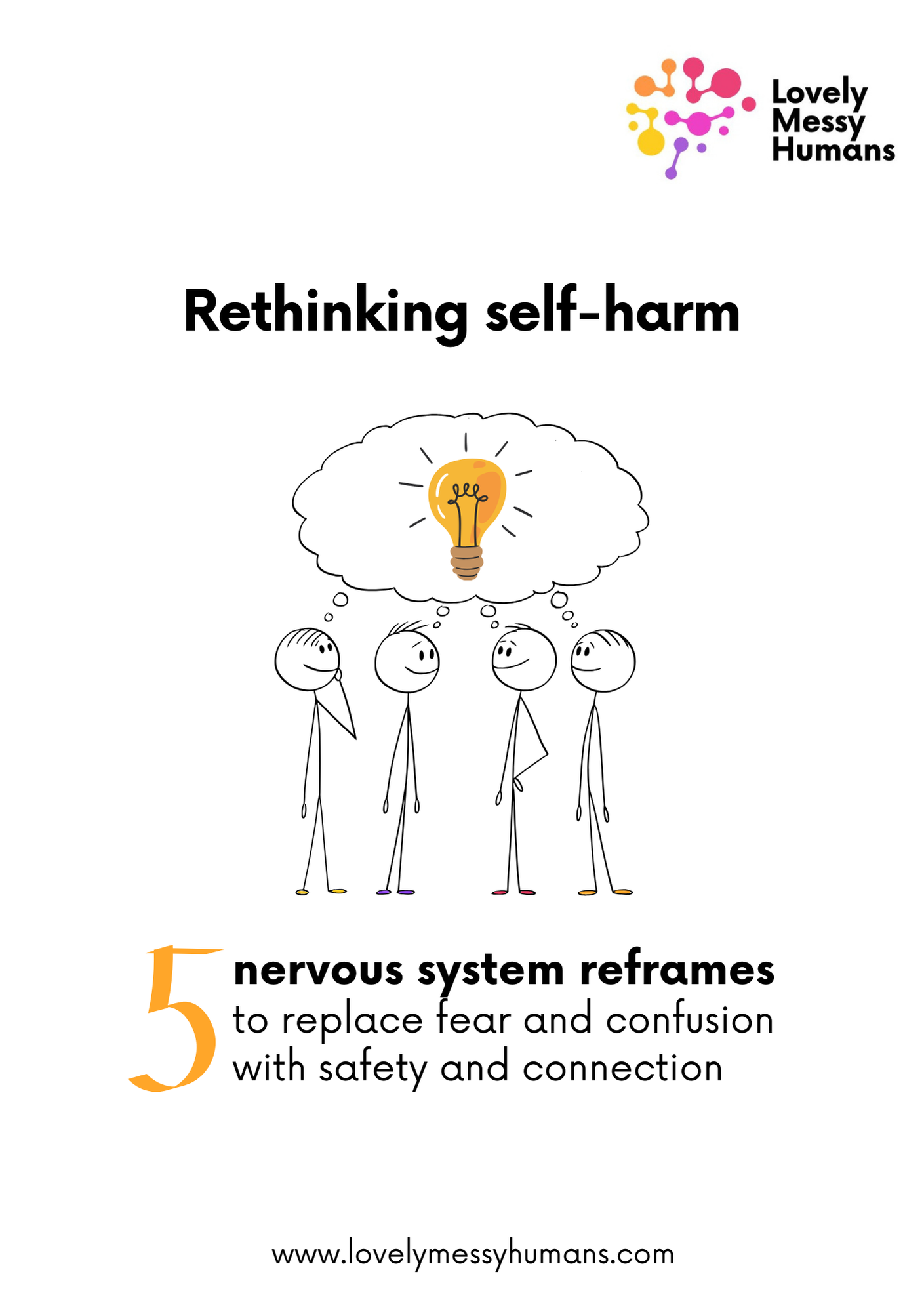
Rethinking self-harm: a nervous system perspective
Designed for educators, professionals and parents, this talk explores why self-harm happens, how the nervous system is involved, and how to begin supportive conversations.
Suitable for school INSET days, parent evenings and wider wellbeing programmes.
From 1 hour, delivered online or in person.
Download the free guide:
How to create safety and connection through the lens of nervous system science: Five reframes
From “attention-seeking” to “connection-seeking”
From “dangerous behaviour” to “distress signal”
From “fix it now” to “first, create safety”
From “what’s wrong with you?” to “What’s happening for you”
From “it doesn’t make sense” to “the body is trying to help”
What we talk about…
-
The mind-body science of the nervous system and being human in today’s world.
-
The building blocks of emotional resilience and emotional regulation.
-
How being neurodiverse can impact our ‘window of tolerance’ and make emotional regulation more challenging.
-
Why understanding the science of the nervous system eliminates shame and prevents trauma.
What people have said

Let’s talk about supporting your team.